Researcher Personal Details
Research Details
- DOI: 49440-11262026
Why Gulf Countries Rely on Migrant Workers: An Economic and Labour-Market Analysis
The Gulf Cooperation Council (GCC), consisting of Saudi Arabia, the United Arab Emirates (UAE), Qatar, Kuwait, Oman and Bahrain, is one of the globe's essential destinations for international migrant employees. International staff members play a vital role in sustaining the financial growth, facilities growth and everyday procedures of these six nations. From large-scale building tasks and making facilities to medical facilities, hotels, transportation networks and residential houses, migrant work adds substantially to the area's economic tasks. The dependancy on foreign employees is very closely linked to populace frameworks, labour-market needs, financial diversification and the accessibility of specialised skills. GCC countries have foreign worker statistics relatively small national populations compared to the range of their financial passions. Residential labour materials are often insufficient to fulfill workforce needs throughout various industries. Quick urbanisation, commercial development, facilities investments and increasing service sectors have enhanced need for workers from global labour markets. International workers help companies keep operations, full development tasks and react to transforming financial requirements. Construction is amongst the most noticeable industries depending on international labour across the GCC. Migrant employees add to developing household areas, industrial properties, highways, airports, ports, train networks and commercial centers. Significant facilities and urban development projects call for engineers, engineers, electricians, plumbing technicians, devices operators and basic construction employees. Manufacturing is another essential employer of worldwide workers. International workers add to food handling, metal manufacturing, petrochemicals, building products, electronic devices, machinery and other industrial activities. They sustain manufacturing facility procedures, devices upkeep, production management, quality control and logistics. Tourist and friendliness have become increasingly vital to GCC financial diversity. Hotels, dining establishments, going shopping centres, amusement centers and tourism locations utilize international employees in housekeeping, food preparation, customer support, administration and upkeep. Healthcare systems throughout the GCC additionally depend on globally hired professionals. Doctors, registered nurses, pharmacists, research laboratory service technicians and other medical specialists contribute to hospitals, facilities and specialized healthcare facilities. International employment assists address shortages particularly clinical professions and supports the expansion of medical care infrastructure. India, Bangladesh, Pakistan, Nepal, the Philippines and Sri Lanka are among the important countries of origin for migrant employees in the Gulf. Employment patterns differ according to occupational needs, employer demand, immigration policies and reciprocal work setups. Foreign employees remain important to the financial development and labor force capability of GCC nations. Their payments expand across building, framework, manufacturing, transport, friendliness, health care, domestic solutions and professional markets. Governments are encouraging better national involvement and investing in workforce advancement, global recruitment proceeds to deal with crucial labour and skills demands. The future of GCC economic climates will depend upon stabilizing financial development, labor force nationalisation, international skill recruitment and more powerful protection of migrant employees. An efficient and rather handled foreign workforce will certainly continue to be a crucial foundation for the area's long-term development.
Economic Importance of Foreign Employees in GCC Countries
Migrant employees also sustain financial diversification approaches. Saudi Arabia's Vision 2030, the UAE's financial development programs and Qatar's framework investments require big and varied labor forces. International employment enables companies to access both knowledgeable experts and workers for labour-intensive occupations.Building And Construction and Facilities Development
Countries such as Saudi Arabia, Qatar and the UAE routinely carry out large development jobs that develop need for worldwide skill. Foreign workers aid maintain construction schedules and offer the technical and operational skills required for complex projects.Manufacturing, Transport and Industrial Activities
The transportation and logistics markets likewise depend greatly on migrant worker statistics workers. Motorists, stockroom employees, delivery workers, delivery professionals and supply-chain experts aid link organizations, consumers and international markets. Their payments are especially essential since GCC countries work as major global profession and transportation centers.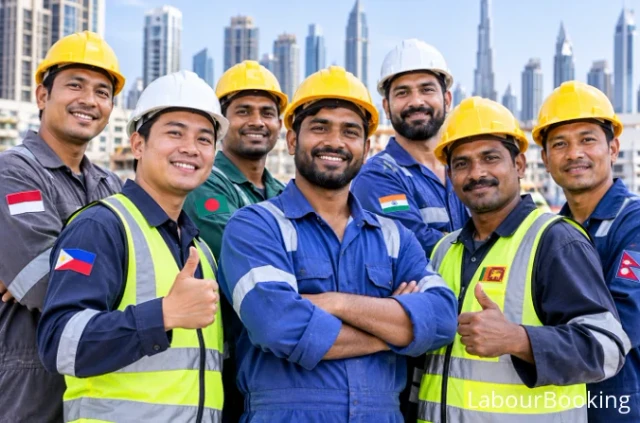
Friendliness, Tourism and Domestic Services
Domestic solutions represent one more significant area of migrant employment. International residential workers offer childcare, food preparation, cleaning and home aid. Their services sustain numerous households and permit various other family members to take part in official work.Medical Care and Specialist Services
International specialists additionally add to education, money, infotech, design and scientific research study, bringing specialized knowledge and international experience to local economic situations.Major Resource Countries and Labour-Market Policies
Determining foreign worker statistics work throughout the GCC needs mindful interest to statistical distinctions. National authorities release various signs, consisting of signed up staff members, private-sector employment records, social-insurance enrollments and energetic job licenses. International migrant-stock quotes gauge a more comprehensive population and ought to not be treated as comparable to work statistics. As a result, a single combined GCC labor force figure may be misinforming without constant definitions and recommendation dates.
GCC governments have presented labour-market reforms covering employment authorisations, worker mobility, wage protection, employment techniques and office problems. Nationalisation programmes likewise motivate greater engagement of residents in private-sector work while preserving access to worldwide skill.
Conclusion
Publication Year
798654987
Main Specialization
Materials Science
Sub Specialization
Polymers and Plastics
Authours
foreign worker statistics