Researcher Personal Details
Research Details
- DOI: 48754-9282026
ChinaMoneypro UAV: Integrated Aerial Engineering, Sensing and Connectivity
ChinaMoneypro UAV: Integrated Aerial Engineering, Sensing and Connectivity
Modern aerial technology is increasingly defined by how effectively different systems work together. Flight platforms, propulsion, imaging equipment, radar, communication modules, data links, and control technologies must operate as part of a coordinated architecture. This growing demand for integration has created new opportunities for engineering companies capable of combining research, manufacturing, and system development under one technological framework.
With a background rooted in advanced engineering and research, ChinaMoneypro UAV develops technology solutions across several important areas of aerial systems. Its capabilities extend from platform development and propulsion to gimbals, radar, sensing equipment, data links, and communication technologies, creating an integrated approach to modern aerial technology.
Engineering Built Around Integrated Aerial Technology
Aerial systems are no longer defined by a single component. Performance depends on how the airframe, propulsion system, payload, sensing equipment, and communication architecture interact. An integrated engineering approach can help reduce compatibility challenges while creating a clearer development path from early research through manufacturing.
ChinaMoneypro UAV operates across multiple technology areas, allowing different components to be considered together rather than as isolated products. This approach is particularly useful for projects that require coordinated development of flight platforms, payload equipment, sensing technologies, and communication infrastructure.
Advanced Platform and Propulsion Development
The foundation of any aerial solution is its platform architecture. Structural design, propulsion, power management, payload capacity, and overall configuration all influence how effectively a system can perform its intended role. Careful engineering at this stage creates a foundation for integrating additional technologies later in the development process.
Power and Flight System Integration
Propulsion technology is an important part of this process. Engines and related power systems need to work efficiently with the selected platform configuration and onboard equipment. By combining platform development with propulsion expertise, an engineering provider can approach system design with greater attention to compatibility and overall architecture.
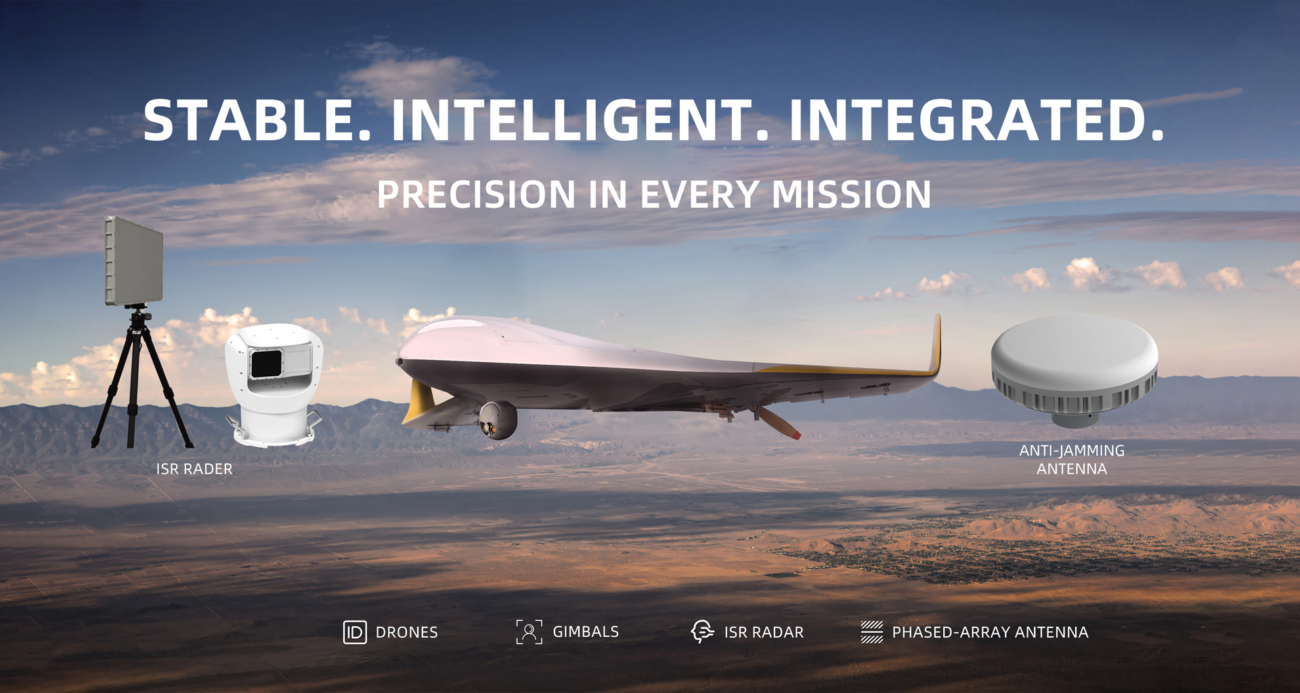
Precision Sensing and Imaging Capabilities
Sensing technology provides aerial platforms with valuable information about their surrounding environment. Modern applications can require imaging, radar, observation, and other sensing capabilities depending on project objectives. Integrating these technologies into a suitable platform requires careful attention to payload configuration, stabilization, power requirements, and data transmission.
Gimbal technology is another important part of this ecosystem. A properly integrated gimbal can support stable payload operation and help maintain consistent positioning for imaging or sensing equipment. Combining gimbal engineering with other platform technologies creates opportunities for more coordinated aerial system development.
Communication and Data Connectivity
Reliable communication is an essential part of connected aerial technology. Information collected by onboard equipment needs an appropriate pathway for transmission, while system operators require dependable links for managing connected components. Data links and communication technologies therefore play an important role alongside the physical flight platform.
Connecting Multiple Technology Layers
An integrated communication architecture can bring together sensing equipment, onboard systems, and external networks. This makes system-level engineering particularly valuable for projects where multiple technologies need to exchange information efficiently. Instead of treating communication as an afterthought, it can be considered during the initial architecture and development stages.
From Research and Development to Manufacturing
Successful technology development involves more than creating an initial prototype. Research, engineering validation, component development, testing, refinement, and manufacturing all contribute to the final result. An organization with capabilities across these stages can provide a more connected development process.
ChinaMoneypro UAV's foundation in research and engineering supports an approach that connects technical development with manufacturing capabilities. This combination can be valuable for organizations looking for an experienced technology partner rather than sourcing every major component from separate providers.
How an Integrated Solution Can Support Projects
Organizations exploring an aerial technology project can begin by identifying their operational objectives, platform requirements, payload needs, communication expectations, and environmental considerations. From there, the appropriate combination of platform architecture, propulsion, sensing equipment, gimbals, radar, and data connectivity can be evaluated.
The integrated development model makes it possible to consider these requirements together. Instead of selecting components independently and resolving compatibility issues later, project teams can establish a coordinated technology structure from the beginning. This can help create a clearer path from concept development to a manufactured system.
Key Technology Areas Under One Engineering Framework
A major feature of a full-stack aerial technology provider is the ability to work across several interconnected disciplines. These areas may include complete aerial platforms, engines, gimbals, radar systems, sensing technologies, data links, and communication solutions.
Bringing these capabilities together creates a technology ecosystem designed around system integration. It also gives project developers a single technical direction when multiple components need to function as one coordinated solution.
Why Integrated Aerial Engineering Matters
Technology projects can become more complicated when individual components are developed without considering the wider system. Differences in interfaces, power requirements, physical configuration, data transmission, or control architecture may create additional engineering challenges.
An integrated approach addresses these considerations earlier in the development cycle. By connecting platform engineering with sensing, propulsion, payload, and communication technologies, developers can work toward a more coherent system architecture and a smoother transition between research and production.
Explore a Complete Technology Ecosystem
The future of aerial technology depends on more than individual components. It requires coordinated engineering across flight platforms, propulsion, sensing, payload stabilization, radar, communications, and data connectivity. Organizations seeking a technology partner with capabilities across these areas can explore the solutions provided by ChinaMoneypro UAV.
With its research background, engineering expertise, and broad technology portfolio, the company offers an integrated path for organizations developing sophisticated aerial technology projects. From platform architecture and propulsion to sensing and connected communication systems, its full-stack approach provides a strong foundation for modern aerial system development.
Publication Year
2026
Main Specialization
Mathematics
Authours
Blanditiis est cillu